Article: A Design-Led Guide to Gifting this Season
A Design-Led Guide to Gifting this Season
Sustainable Gifts for the Home
There is a profound satisfaction in gifting something meaningful to someone who cares deeply about design, and especially when they choose to place it proudly in their home. However, the gift you give must live among things that have been chosen and have earned their place.
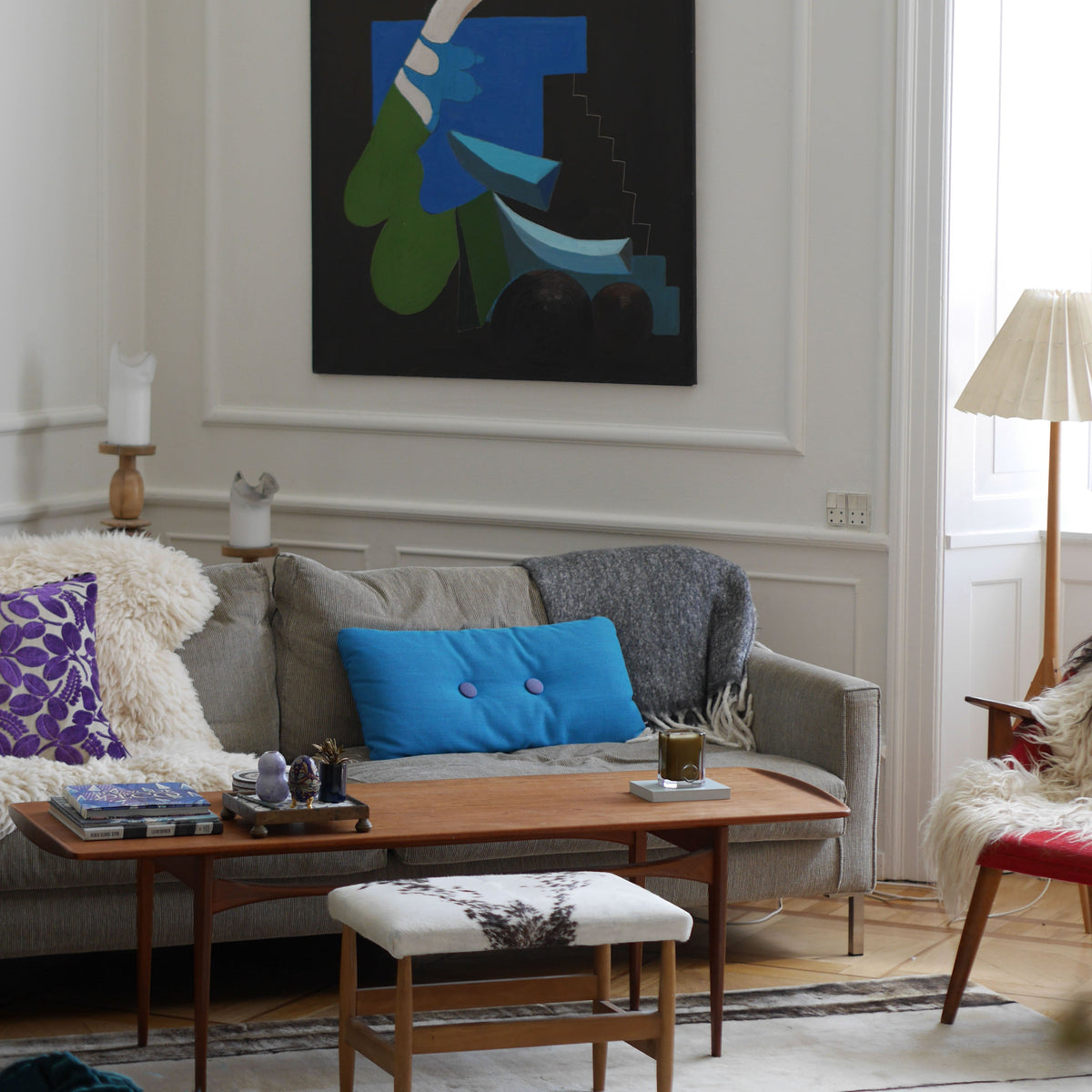
I will assume, from you arriving here, that you are looking for something quite specific. Something with enough presence to take centre stage on the coffee table, and enough character that a guest stops mid-sentence to ask where it came from or who gifted it.
What makes an object worth keeping?
Whether it was designed with real purpose and intention.
A great many objects are made to capture a financial opportunity. Is the margin good? Can we move enough volume to justify the investment? Those are reasonable questions however, are the wrong ones to begin with. For me, metrics strip away room for pure creative expression and instead serve to satisfy a commercial, not a creative or environmental ambition. You can see the result on any department store shelf: the same forms, the same materials and the same colour palettes. Thin glass rather than thick. Branded stickers instead of distinctive design features.
The same thing has happened in cinema, which is the version of this argument closest to my heart. Decisions that once determined whether a script was rooted in an authentic and novel story now focus predominantly on projected opening box-office weekends, and whether a viewer glancing at their phone can still follow the plot. Run that test in the 80s and we’d have lost both Once Upon a Time in America and Blade Runner, both of which lost money on release and are now considered either canonical or cult classics. People still watch them religiously four decades later, which is the whole point. The things that last tend to be the ones somebody insisted on making.
An object designed for pure creative expression and with a genuine purpose, is trying to be something different; bold, a little strange, deliberate, a clear expression of somebody's taste. Those objects tend to age into a presence rather than clutter, and they are the ones that get moved from house to house and eventually handed on. Antique furniture is another proof; made with conviction, built to last, and still sought after generations later precisely because nobody was designing it to be replaced.
The environmental case sits in the same place, and it is simpler than it is usually made to sound. Almost everything an object will ever cost the planet is spent in the furnace or the kiln, long before anybody sees it. Once the thing exists, the only variable left is how long somebody wants it. A thing that gets loved never enters the waste system at all.
Which is a cheerful conclusion, and the reason design gets more of our time at ENYALYË than anything else.
How do you choose for someone who cares about design?
Stop trying to guess their exact taste. It is the mistake almost everyone makes (me included), and it yields gift ideas that are either too close to what they already own or are so cautious they could have been for anybody.
Choose something with a strong point of view instead, and trust them to place it. People with a developed eye are good at this. They will move three things for an object that deserves the room.
Three fundamental questions have served me well and are the ones I tend to rely on most:
Does it have presence? Does the object hold a room, or does it need styling around it? A piece with presence can be set down almost anywhere and look deliberate. A piece without it needs a supporting cast; the tray, the stack of books, the two smaller things beside it. Presence comes from form and weight far more than from decoration.
Does it have a narrative? Can they answer the question of where it came from? People who care about design get asked about their things, and an object that carries an answer keeps giving something back; made here, by this person or brand, from this material. It becomes part of how they talk about their home. It is also the quickest way to tell a considered object from an ordinary one.
What is it made from? The variable that decides whether an object survives a decade. Plastics yellow and grow brittle, thin metals pit, veneers lift, painted finishes chip and cannot be repaired. A few materials hold, or improve. Glass does not yellow, cloud, warp or fade. Good porcelain and unglazed stone take a patina. Solid timber and brass mark, and the marks read as history.
What should you give at Christmas, a birthday or a housewarming?
Christmas. The occasion that opens onto a new year, which changes what works. A Christmas gift should, at the very least, survive through January and February and so the useful question is how it will read on a wet Tuesday in February. Light and warmth earn their place in the darkest weeks of the year, as do things that help somebody into whatever comes next; a new job, a first house, a resolution made out loud.
A birthday. Also opens onto a new year, though theirs alone, making this the occasion for the thing that only makes sense between the two of you. The reference nobody else would get, the detail you noticed about them that they hadn’t. Gifts like that tend to become a story you both tell. An experience is the finest version of it however, one advantage objects hold is duration, because they are there every morning of the year ahead, in the place they earned.
A housewarming. You are choosing for a home that has not yet found its character, which makes form more reliable than pattern or a loud statement piece. A strong silhouette in a restrained material will work in almost any house.
What works for me, is considering the moments that will take place in their new home; the first meal they cook, the first evening with nothing left to unpack, the first cosy date night at home. Choose for one of those and you give something more than a gift. It becomes part of how they remember their first year in the house, and part of your story with them. A new home is also the one place where everything in it has been chosen on purpose, so give something that belongs there from the first day.
An evening at somebody's house. Wine is drunk and flowers are gone by the weekend. Something that stays in the room, and reminds them of that evening whenever they notice it, lasts considerably longer.
Somebody who has everything. Look for the blind spot, which every full house has; the thing they use every day and have never thought to replace. Upgrading it slots into a routine that already exists, so it asks nothing of them, and it tends to move their standards along. That is a gift that carries on working long after the occasion.
Are candles a good gift?
Yes, when the vessel is worth keeping after the candle has gone.
A candle is two things given as one; a scent, which is slowly used up over time, and an object, which stays in the room whether it is lit or not. Almost every candle is chosen for scent and designed around it. Judge it the other way round and the whole decision changes. If the vessel would earn its place empty, the fragrance becomes a bonus rather than a verdict, and if the scent can be replaced, the only part of the choice that could not be undone disappears.
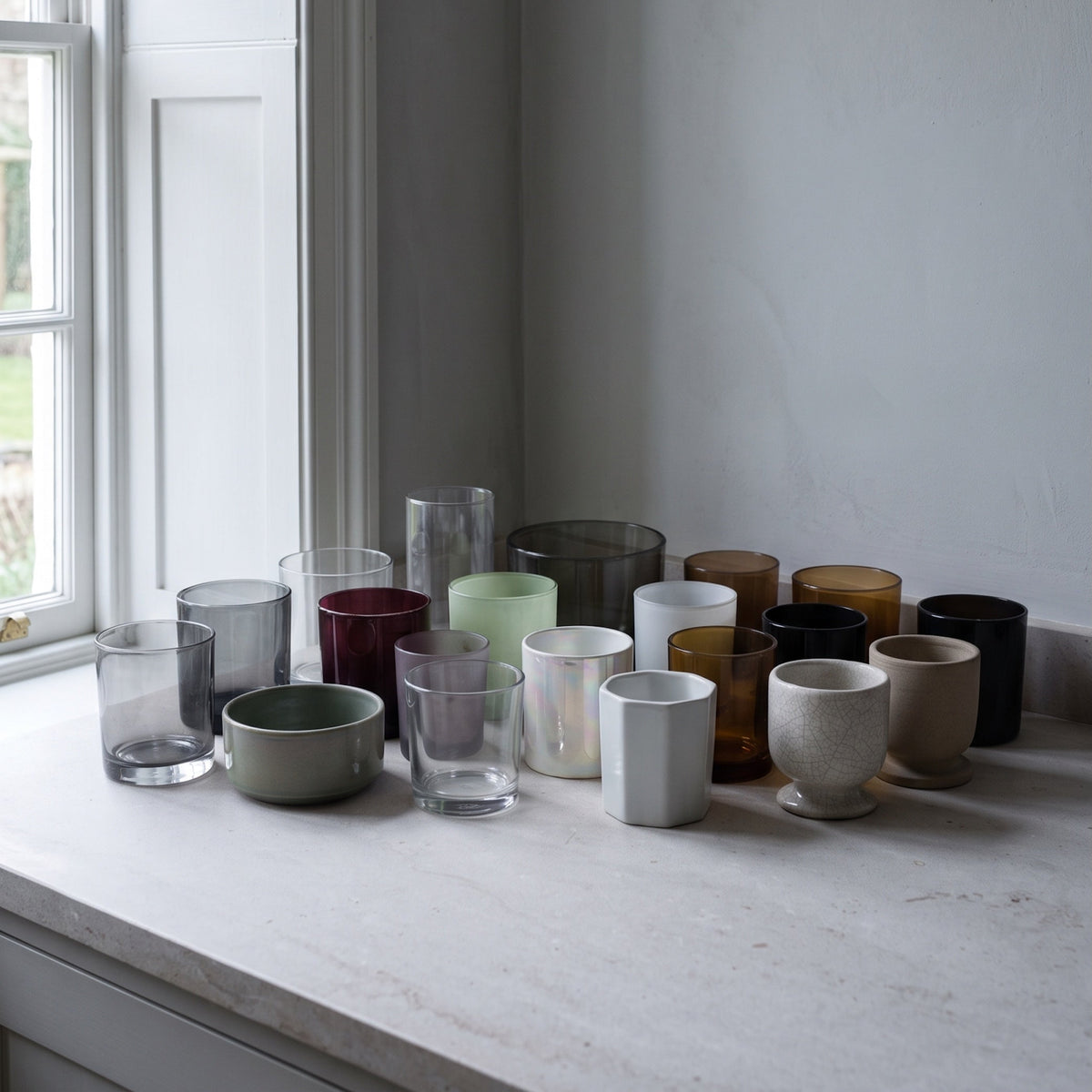
In England, candles appear by name in government guidance as glass that councils are not required to collect, so a vessel built to outlive its wax is a deliberate decision rather than a given. Two questions find the ones that were; would it still be on the coffee table when the wax has gone? Is it made to be refilled?
Give a gift they would be gutted to lose.
The reason antique furniture is not an environmental problem is not that anyone engineered it for circularity. It is that it was made well enough that the question never came up.
That applies to a candle vessel as much as to a chest of drawers, and it is the whole of what we are trying to do. At ENYALYË we design and make refillable candle vessels and interior objects, working upstream with designers drawn from several different disciplines, long before anything is made. Our aim is to make things nobody would ever want to throw away.

Written by Akbar Iqbal